


Hard on the Rootsman: The Martin Campbell interview
Intro note: This interview was originally published in Irie Up issue twelve.
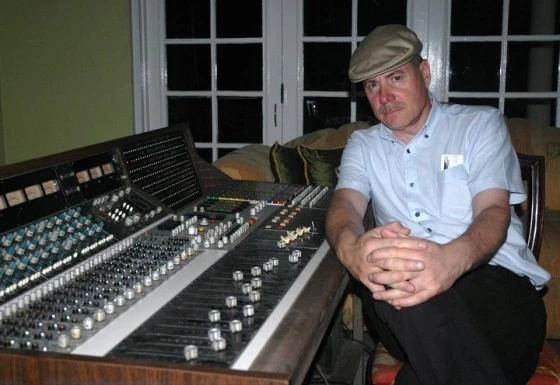
How do you describe reggae artist Martin Campbell? His music is authentically rootsy, his lyrics are properly prophetic, and with his Jamaican accent and rootical timbre, his fans assume that he’s a Rastafarian. Some know him, after one of his songs, as ‘The Rootsman’. Yet he’s not comfortable being labelled and in his own words, he’s not an easy man to pigeon hole. He simply trods his own path.
Yet Martin Campbell is one of the best loved of roots reggae fans, and you’re most likely to hear his music on a soundsystem. His music was first championed by Jah Shaka and Campbell’s heavy, minor chord tunes and serious lyrics sound genuinely heavy on a soundsystem.

Historical Tracks 1978 – 1991
When we started searching out more material from Campbell, a Youtube search threw up a video of Campbell gingerly approaching the control tower at a King Shiloh dance in Paris, and taking the microphone to sing ‘Wicked Rule’. He looked, as my friend remarked, like an ‘English country gentlefarmer’. Campbell, as it turns out, was the son of an English army man, which accounts for his peripatetic upbringing. Born in Germany, he moved to Jamaica as a child in the late 1950s and briefly attended the Alpha Boys School. An accomplished musician, Campbell was drawn to the Kingston music scene in the 1970s, working with the musicians who crowded into Channel One, the studio of the Hookim brothers which became the top studio in Jamaica as the rockers style reggae began to dominate. With Scientist at the controls and Sly and Robbie and then the Roots Radics band as the central rhythm sections, Channel One’s sparse rhythms would go on to dominate soundsystems until the emergence of the digital sound in the mid-1980s. By that stage, Martin Campbell had moved back to the UK, and in the late 1980s he began working with Jah Rej at Jah Works, producing the iconic ‘Wicked Rule’ around 1990.
Articulate and thoughtful, Campbell doesn’t fit neatly into any category. He has suggested himself that perhaps he should be known as “that strange bloke who just does not fit in to any pigeon hole, following his own path”. Refreshingly, he challenges much of the mythology around reggae music. He continues to be in demand as an artist for soundsystems and live shows so he talks to many artists around the world; he’s been in Mexico and Brazil in recent years where he’s revered by selecters for his unflinching attacks on the corrupt system. He’s conversant with the Bible, writes about ignorance and poverty, and speaks about the mix of elements that went into making reggae music, from the Rastafari influence to the people like the Hookim brothers, former amusement arcade owners who went into the reggae business when the Jamaican government came down on gambling in the early 1970s. Anyone following Campbell on Facebook will know that he’s been involved in some wickedly funny exchanges with Hopeton Overton Brown – better known as Scientist – about the origins and realities of reggae music produced at Channel One. Occasionally Campbell will come up with answers to various puzzles about who produced what and where, as he’s collected various bits and pieces from the Channel One studios that are parts of reggae music history.
Campbell’s tune ‘Hard on the Rootsman’ is a favourite on soundsystems. There’s a great lyric that will resonate with anyone who has travelled in a poor country:
Can’t get no transportation to take your produce to town
You’ll be hitching a ride, You’ve got no money to hide
You can’t sell your banana, You can’t sell your cane
Potato can’t sell, The coco can’t sell
So many man travel in an open truck back, and that’s a fact
So many men have fi travel in an open truck back, and that’s a fact
I found the tune haunting. A few months earlier, a Tunisian street seller called Mohamed Bouazizi had set fire to himself in protest at the confiscation of his wares, and his death triggered an uprising that spread throughout Tunisia and the rest of north Africa.
Martin, this tune Rootsman brings to mind the vegetable seller in Tunisia who set fire to himself because he couldn’t sell at the market. These songs of yours seem to be rooted in Jamaica but they have a broader significance than that.
Absolutely, because the Jamaican experience is the Third World experience. So I guess it’s relevant to a lot of places in the world that are living in the same conditions. I can appreciate that.
But I can tell you something, the people in Jamaica don’t want to listen to my music. They don’t play my music at all, there are various factors and it’s a deep subject. I don’t want to go into it too much now because it’s a prickly subject.

Ernest Hookim at Channel One
I think that the music had got distorted. The first time, although a lot of the artists were poor, there were other people involved in music production in Jamaica, back in the early days. It wasn’t just a black thing. There was white man and Chiney man involved in it as well. These people had money, so they had money to put into studios and to buy good equipment. So they had the money to pay for things, the production techniques, and they could spend time on musicians. So that is why when you listen to the earlier stuff from way back, it was produced better. There was more money involved in it.
Now what has happened is, through technology, the poor man feels that he doesn’t need to go into a big studio and spend a big amount of money. He can get away with some cheap computerised thing; he feels it is good enough. That’s not the whole problem but it’s one of the problems.
What you put in is what you get out.
Absolutely. I feel that is what is happening in Jamaica right now, they are not putting very much into it, creatively.
How many big studios are left in Jamaica?
There’s maybe five studios left now, if that. Tuff Gong, Harry J, Penthouse. Actually maybe just three. I’ve said to Sly Dunbar, the tonation of the drum there, it doesn’t sound anything like it used to sound at Channel One. I don’t know, maybe they don’t want to achieve that anymore, but to me, everything sounds flat, very safe, but it’s not really saying anything.
The youth are not being subjected to what real instruments sounds like. They don’t know what a real drum sounds like. So they accept that sound that is like a snap, a kind of snapping sound. That’s not what a real drum sounds like!
You play the instruments on your own productions?

Soundsystem Style
I usually play most of it. Drum, bass, everything. I have to do that. You know, one time a guy came up to me in North America and said to me ‘Yuh thief our music’. I said to him, ‘If I grow up in Cuba, I play Cuban music. If I grow up in England, I play rock music. I happened to grow up in Jamaica, so I guess that’s the type of music I play. Now you accuse me of thieving it?’ He didn’t know what to say.
You were part of Channel One in Jamaica?
I used to go there a lot, and then I got to know the guys there. Jo Jo Hookim became like a father figure to me and is the kindest person I have ever known. I see him a lot to this day, they are like family to me. They started in 1971, and if you listen to a lot of early Bunny Lee, from around 1973, it was recorded at Channel One and then they took it to King Tubbys to be voiced.
If you look back at the vinyl, it says recorded at King Tubby’s, but Tubby’s never had a studio that would take instruments. He would only voice tunes. I can tell you that the first tune voiced at Channel One was done in 1973, and that was Ken Boothe singing ‘Is it because I’m black’.
You’ve been in the business a long time, but when did you do your first tunes?
The first set I recorded, which I consider to be quite amateur, were done in the late 1970s on a little four-track recorder and a 12×12 console and a Grampian spring reverb, and that was it. These tunes were like sketches for me, but I released them on an album called Historical Tracks, and people embraced them. You know, sometimes people like that raw sound of the tracks.
So you were around Channel One at a high point for the music and productions?
Well, I can tell you, I am glad I was around, but at that particular time, nobody thought that the music would go any further than London and New York. Because in those days, those were the two places outside of Jamaica that took the music. We never thought it would go beyond that. We loved, the music and we had a lot of faith in it, but record companies and the mainstream listening public used to just look on reggae as being … well, someone said to me once: “It sounds like a couple of people banging coconuts together in a shack”. Talk to any artist from that time and we didn’t have any idea that the music would have gone on to the extent that it had now.
When did it first look like the music was going to go international?
Around 1976 or 1977. Chris Blackwell had started marketing Bob Marley and then Island started to do other artists and to distribute the music so more and more people were embracing it. I remember thinking to myself at that point, I hope the music doesn’t turn too commercial. [He laughs] You know what happens when the white man gets hold of the music, he is going to say, ‘No you can’t make the drums that heavy and you can’t make the bass so heavy, and we’ll have to flatten out the drums and make it more palatable so it can be played on the radio’, and all this type of thing. So even at that time, I felt glad to see the music going out there, but I also thought perhaps that they are going to do something. They are going to say, ‘You can’t sing that song, you can’t sing about being black and suffering. You can’t have that!’
People say that Channel One and that time is finished but it’s still possible to achieve that sound with the right equipment and good musicians, right?

Flabba Holt, Martin Campbell, Style Scott
You are absolutely right, and I tell you, I am glad I was there to know how they achieved it. I was just on the phone to a guy who is taking some dubplates off me and I was telling him that I’ve got so fed up with the digital thing that I’m going back to recording drum and bass on analogue. Just this week, I’ve wheeled my old Ampex 16-track two-inch tape deck back into the studio. I recorded ‘Wicked Rule’ on that. I’ve got quite a few bits of Channel One equipment here now, so I’m well on the way. That is what I want to do, to get back to that vintage sound.
That sound is a combination of things. At the time I didn’t think anything of it, but I am so glad now that I was able to see how they were miking things up, and the machines they were using, because I realise now that you are not going to achieve that sound with computers. It is a sound that is completely away from all of that. You have to have a real piano, preferably out of tune! You know? These things, they take up a lot of room. People don’t have room in their houses to have all of these instruments. So it’s a big deal and you really have to be dedicated to it.
Digital production might be cheap but again it’s a matter of thinking about the musicians, engineers and the other people involved. It’s more expensive, but at least the money is flowing around.
Now you are touching on something close to my heart, and that is what is going on with the modern soundsystems now. They don’t even want to pay for specials anymore, because most sounds have realised that they can make tunes on a computer, so they are playing their own stuff over their sound. It’s boring. I’ve been in a show when I am going to be performing and I come out first to see what is going on – and I see that the crowd is bored.
There’s a lot of ignorance in the business. Don’t even think about it when you go to Jamaica! I said to a lot of people, this music won’t go further than the Rasta thing if you don’t get out of this rut. They are treating the music as if it is being played in a church, and it’s some kind of preaching going on. It’s not just Rasta people listening to the music. You are not going to get a wider audience if you keep doing that, you need to spread out.
Talking about the sound, people are used to listening to music produced in America, in these top studios. So they are not going to accept this cheap thing, and singing in patois so that they can’t understand a word that is being said. So in order to make the music international I always try to make sure that people understand what you are saying, and understand the song, and that the music is nice to dance to, or that the music is heavy.
You talk too about the importance of song structure.
Well, the thing that is missing is melody. In Jamaica now, they kind of talk through the song, they sing-jay the song.
Steelie and Clevie said that they were removing more and more melody from their songs because the singers/singing was so bad and listeners don’t notice that much when the song is almost pure rhythm.
The singers are so bad because no one spends any time with them. Someone needs to sit down in the yard with them, there is a pot of food cooking inside, let the boys come into the yard and when someone is singing, you say ‘no, no, do this’, and work with the boys, show them how to sing. There is a lot of talent in Jamaica but no one is investing in it, no one is putting anything in to it.
I remember in Channel One, some guys would just sing off the top of their heads, and repeat the same lines, even the good artists, because they could not read and write. My wife said to me, some of those tunes made it because the riddim sounds so good. I can accept what you say about Steelie and Clevie because no one spends any time with the youth.
So what’s your opinion on the place of roots music in Jamaica?
Well, it is a sore subject and I don’t know if you want to write it down because it might upset some people. The truth is, I think, that most Jamaicans don’t really like roots, because there is too much depth to it. They tend to love things that are lighter, that is why they loved ska and why they love dancehall today.
But roots reggae, now that is more serious and it is a more serious message. The bassline is hitting you and it’s a bit finger-pointing. [Campbell has noted in his own posts on Facebook: "The corporate world markets are very pleased with the way Reggae music is developing because it is slowly and finally fitting into their agenda for world music. No longer do we have any lyrical content within the roots genre that awakes people to any kind of warnings or real awareness of the rulers plans and intentions to continue to dominate the masses of the world population. And even better, because the rules on how music is actually produced changed many years ago, we now have a corporate sound that is level, clean and sits comfortably along with all the other genres without drawing any real attention to itself. Indeed like a lot of ethnic music from the past this music gets diluted and changed to fit the ears of the new audiences it now caters for, it then no longer remains purely cultural but becomes shall we say an entertainment medium for people to get up and have a good time. This serves the ambitions of the slave masters who like to keep the slaves dumb on the plantation, away from the few who still continue to annoy and alert the masses through their art and finger pointing."] In my opinion the majority of Jamaicans don’t love that at all. That’s why roots music was never of any significance in Jamaica. Does that surprise you?
Not really, when you see how little support reggae got from the Jamaican institutions, even though reggae is one of the great Jamaican treasures.
The truth is that Jamaicans never really liked roots music. If you ask them about dancehall, they say, well this is the way we do it. So I say, okay, if you want to make music for your local scene, fine, but I want to make music to go international, to make it for everyone else. If you want to grow bananas, fine, but I want to sell mangoes because I know I can sell mangoes around the world. That is the argument but a lot of them don’t want to hear it. The rest of the world wants to hear roots music but in Jamaica they don’t love it at all.
Tell us about your plans for more vinyl releases.

Jo Jo Hookim, Martin and Ernest Hookim
I am going to release some exclusive 10” vinyl mixes, very limited runs of 300 or 400, that is it. I already have plenty of tunes that people have not heard but a lot of people don’t want to pay for music anymore. As soon as someone has bought it they are loading it up onto Facebook or Youtube. So there is a big culture of youth saying ‘look, I have this’ so everyone else is copying it. I have tried to talk to people about it and their answer is that they are promoting roots music! So I am afraid the answer to that question will be that unless you are prepared to pay for this music, you will only hear it on a soundsystem. You will have to go to a sound to hear it because other people don’t want to pay for it. I have a feeling that this is the way it is going to go. That’s why Jo Jo doesn’t want to get back into the business. He did have a fantastic idea for a soundsystem, where they music would only be played on a sound, a surround sound. People would pay to get it. They would not be able to buy the tunes, but only to pay to hear them.
You’re travelling a lot now and going to places where soundsystems have only opened up recently.
I just came back from Mexico and the ghettos in Mexico reminded me very much of the ghettos of Jamaica, but the difference is that the people in Mexico love roots music. They have the soundsystems too, they’ve done their research. They have the amps and the pre-amps.
When you go there, you don’t see dreadlocks. You just see ghetto people. I met an African chap there, he invited me for lunch. He reckoned I was a prophet or something! He said to me that I should go to Africa and do something, and I think the African people would accept it.
I feel that the future for artists like me will be live shows and dubplates. But the business of making records, where people are just downloading the music (for free), I don’t want to go down that road. I have a lot of music out there already, so I don’t need to put out a lot of new stuff. But I am a creative person so I will keep making music and songs.
There is another avenue I want to go down, and that is building rhythms for other people to voice. As you know, when you have a lot of musicians around, you have a vibes. I remember Sticky and Scully arguing about which of them would play percussion on the next session at Channel One. So you would have lots of musicians hanging around waiting to get in on a session to make a lickle money.
Any last thoughts for our readers?
One important thing is that we need more singers. We need to get people away from their computer screens, to learn to play an instrument or learn to sing. A lot of the veteran singers are going to be dying off in the next ten years, or getting too old, so if we want to keep the roots thing going, we are going to need more singers.